Philosophy
Creation is easy.
Restraint is the product.
Anyone can spawn more agents. The discipline - and the whole argument for AgentGod - is that it writes them from nothing and expects them to be gone by dinner.
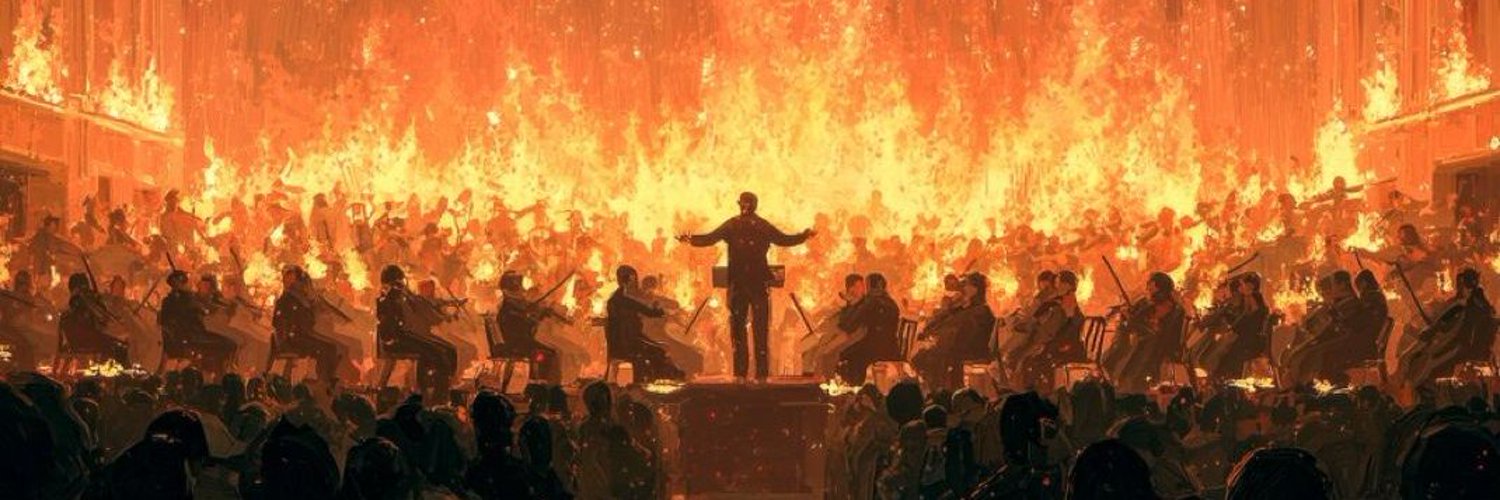
“Now I am become death, the destroyer of worlds.” And also, their creator.
01 The inheritance
Why the name
Oppenheimer's line is remembered for its dread. What gets forgotten is that the verse it comes from describes something with both functions - a thing that makes and a thing that unmakes, and is defined by holding the two at once.
We took the name because that is a fair description of the machine, not because it sounds ominous. A system that can only create accumulates. A system that can only destroy is useless. The capability worth having is the pair.
The power to build is unremarkable without the will to tear down.
AgentGod is not presented as a benevolent helper, and not as a threat. It is an instrument with two edges, pointed at a problem you chose, under limits you set.
02 On creation
Fit, not volume
The naive reading of multi-agent systems is that more agents means more capability. It does not. More agents means more coordination cost, more duplicated effort, and more surface for a wrong answer to enter through.
So creation is a decision, not a reflex. AgentGod asks what the objective actually decomposes into - which parts are genuinely independent, which need different tools, which need a different kind of reasoning - and it staffs exactly that shape.
Three agents that cover three distinct regions beat twenty that overlap. The ceiling is four, and it is a ceiling, not a target - most tasks are staffed by two.
03 On destruction
The feature
An agent that outlives its purpose does not become harmless. It becomes an unowned process with credentials, a stale context that still answers questions, and a line item nobody can explain.
This is the failure mode of every long-running autonomous system: not dramatic misbehaviour, but accumulation. Things left on. Things half-finished. Things nobody remembers authorising.
An agent that outlives its purpose is not an asset. It is a leak.
So deletion is not cleanup that happens if the run is tidy. It is a
step in the sequence with the same standing as execution. The run is
not finished when the answer arrives - it is finished when
generated_agents/ is empty again and you have said what,
if anything, was worth keeping.
The practical consequence is dull and valuable: every objective starts from zero. No inherited assumptions, no residue from last week's question, no context you cannot account for.
04 On authority
Who is in charge
Calling something a god is a joke about scope, not a claim about authority. AgentGod has enormous latitude inside a boundary, and none at all over where that boundary sits.
You write the task. You watch every phase on the board as it happens. You interrupt it and the whole thing stops. And when it is done, you decide whether a single thing it built survives the run. Autonomy is what happens inside those limits - and it is fast precisely because the limits were settled first.
That trade is the whole design. Give the system real freedom in a small, well-drawn box, and you get speed without surprise.
- 01The task is authored by you, never inferred. At most one clarifying question, and only if someone is there to answer.
- 02Every line it writes is read by the guard before it is allowed to run.
- 03Every phase is on the board as it happens, and every run is archived to
runs/. - 04Nothing enters your library without you saying so.
Creation, and the restraint around it.
It writes, it uses, it destroys. The third step is the one that makes the first two safe.